


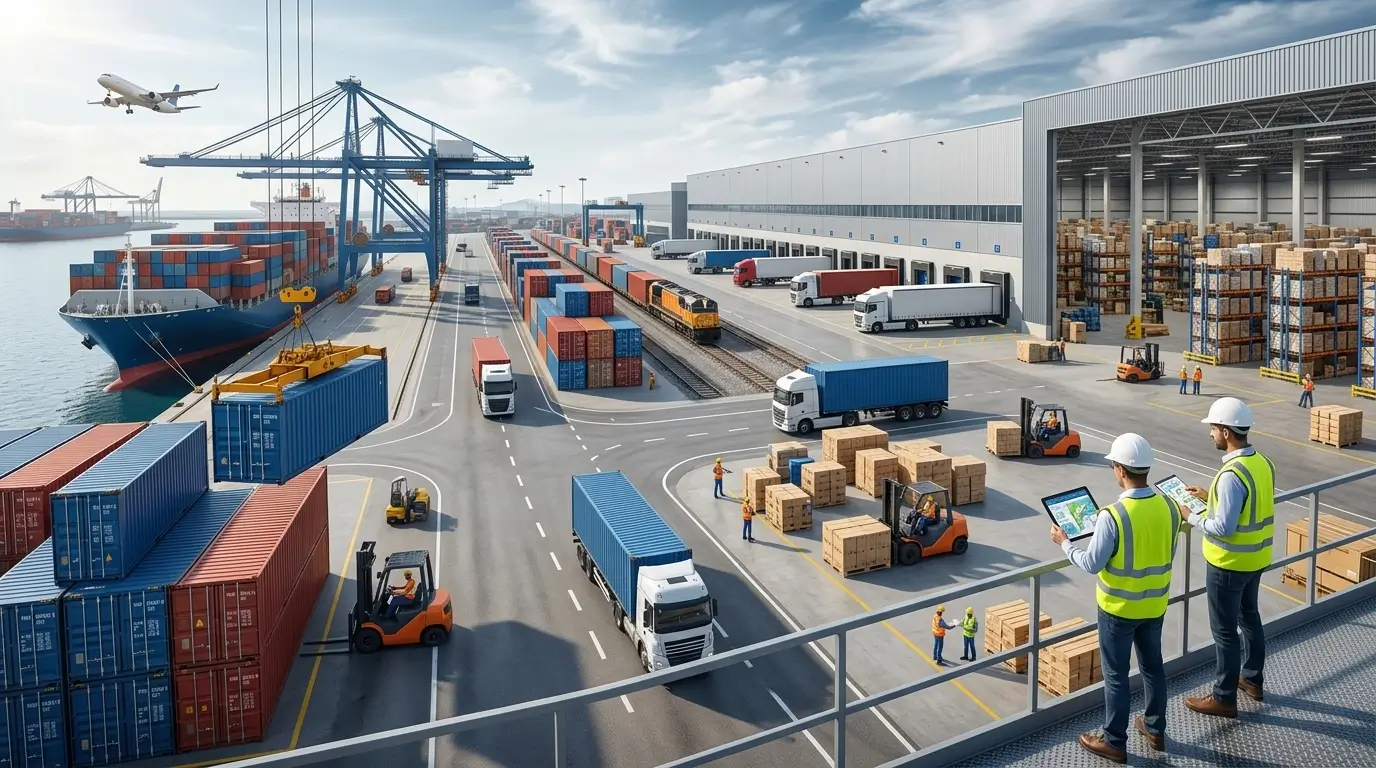
In today’s business world, logistics is not just about transportation activities. Delivering products to the customer at the right time, in the right place, and at the right cost is a strategic process that requires planning, coordination, and the use of technology.
In this article, we cover the basic concepts and processes of logistics in a simple yet comprehensive way.
What is Logistics?
Logistics is the process of planning, implementing, and controlling the movement of products from the point of production to the end-user. This process includes transportation, warehousing, inventory management, and information flow.
The main objectives of a successful logistics operation are:
- Increasing customer satisfaction
- Reducing operational costs
- Optimizing processes
Key Components of Logistics
- Transportation (Transport)
It is the physical movement of products from one point to another. Road, sea, air, and rail transportation are the most common methods.
👉 Choosing the right transportation method is critical in terms of cost and delivery time.
- Warehousing (Warehouse Management)
It involves storing products in specific areas before or after shipment.
Good warehouse management:
- Reduces stock losses
- Increases operational speed
- Improves order accuracy
- Inventory Management
Ensures that inventory is kept at optimal levels. Excess stock creates costs, while insufficient stock leads to customer loss.
👉 Companies that fail to strike this balance generally generate losses, not profits.
- Order and Shipment Management
It is the process of receiving, planning, and converting customer orders into shipments.
In this process:
- Correct vehicle planning
- Route optimization
- On-time delivery
play a critical role.
- Use of Information and Technology
In modern logistics, technology is no longer an option but a necessity.
Systems used:
- ERP (Enterprise Resource Planning)
- TMS (Transportation Management System)
- WMS (Warehouse Management System)
👉 Managing operations without these systems is like driving in the dark.
Factors Determining Success in Logistics
The success of logistics operations is not measured solely by the number of vehicles or warehouse size.
The main determining factors are:
- Accurate planning
- Data-driven decision making
- Standardization of processes
- Instant tracking and reporting
Especially today, the use of real-time data provides a competitive advantage.
Why is Logistics Management Important?
Effective logistics management:
- Shortens delivery times
- Reduces costs
- Increases customer satisfaction
- Minimizes operational errors
In short, if logistics is managed well, the company grows; if managed poorly, the company incurs losses without realizing it.