

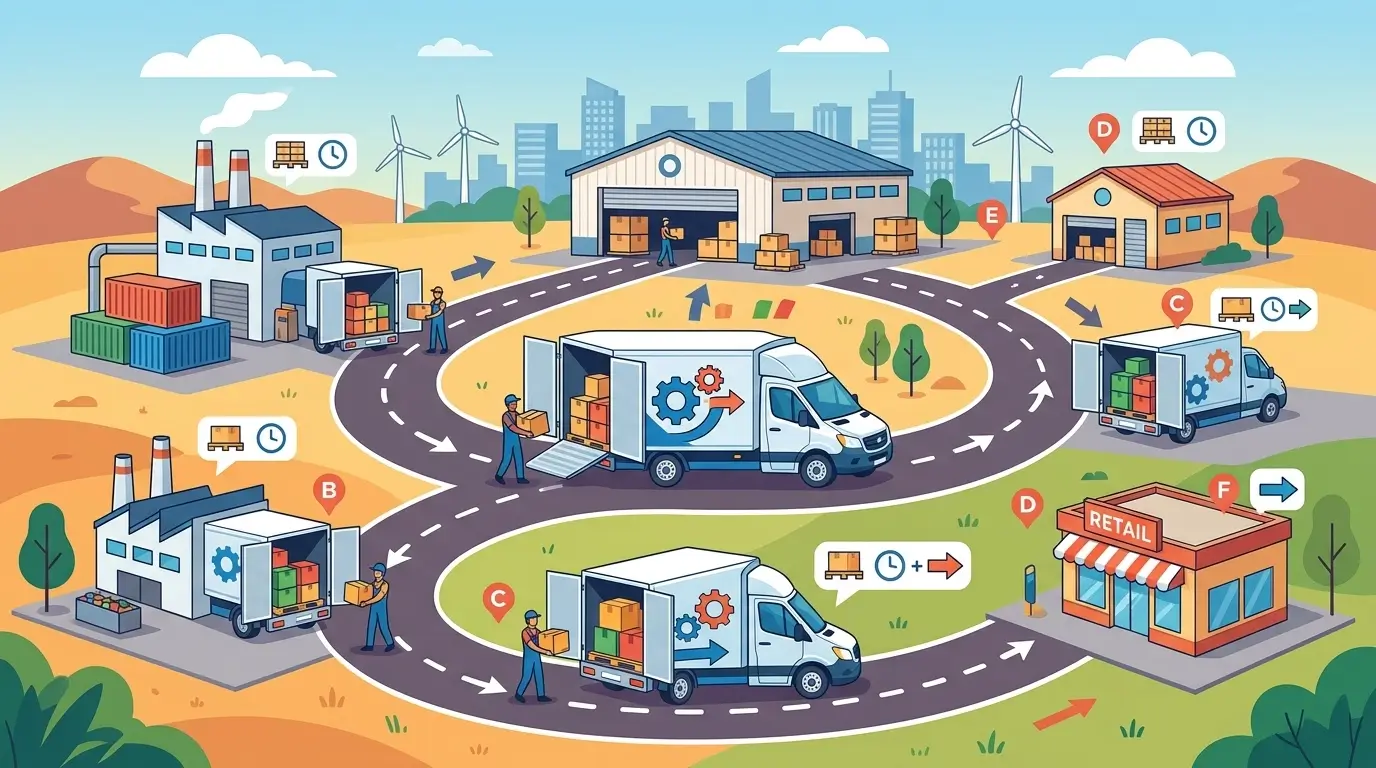
Milk Run is a planned transportation model in logistics where a single vehicle collects or distributes goods to multiple points along a specific route.
It gets its name from the fact that, in the past, milk delivery vehicles regularly stopped at different points along a fixed route.
How Does Milk Run Work?
In this model, the vehicle:
- Follows a fixed route
- Stops at multiple loading or unloading points
- Completes multiple operations at once
For example:
A vehicle leaves the warehouse → collects goods from 3 different suppliers → delivers to a single point
or
Leaves from a single center → distributes to different customers
👉 The critical difference here: the vehicle works for a planned route, not “for a single job”.
The Difference Between Milk Run and Classic Transportation
In classic transportation:
- The vehicle carries a single load
- Goes to a single point
- Can return empty
In Milk Run:
- Vehicle occupancy rate is maximized
- Empty mileage is minimized
- Multiple jobs are done in the same trip
So the difference is actually this:
classic model = piecemeal operation
milk run = systematic and optimized flow
Advantages of Milk Run
- Cost Advantage
Multiple jobs are done with a single vehicle. Fuel, driver, and operating costs are reduced.
- Higher Vehicle Efficiency
Vehicles travel less empty, carrying more load.
- Planned and Organized Operation
Routes are fixed, the process is standardized. This reduces the error rate.
- Supply Chain Synchronization
Suppliers and customers work according to specific hours. This makes the operation more predictable.
Is Milk Run Always Good?
No. This is the point most people overlook.
Milk Run fails in the following situations:
- Low-volume or irregular shipments
- Suppliers are not readily available
- Route planning is poorly done
- In urgent shipments with high time sensitivity
👉 In other words, Milk Run is not a “cure-all model,” but a system that should be used in the right place.
Where is Milk Run Used?
- In the automotive and manufacturing sectors (most common use)
- In retail distribution operations
- In supplier collection processes
- In intra-city distribution networks
Conclusion
Milk Run is a powerful model that increases efficiency in logistics. However, the real benefit comes with proper planning and disciplined implementation.
A poorly designed Milk Run operation creates chaos instead of reducing costs.