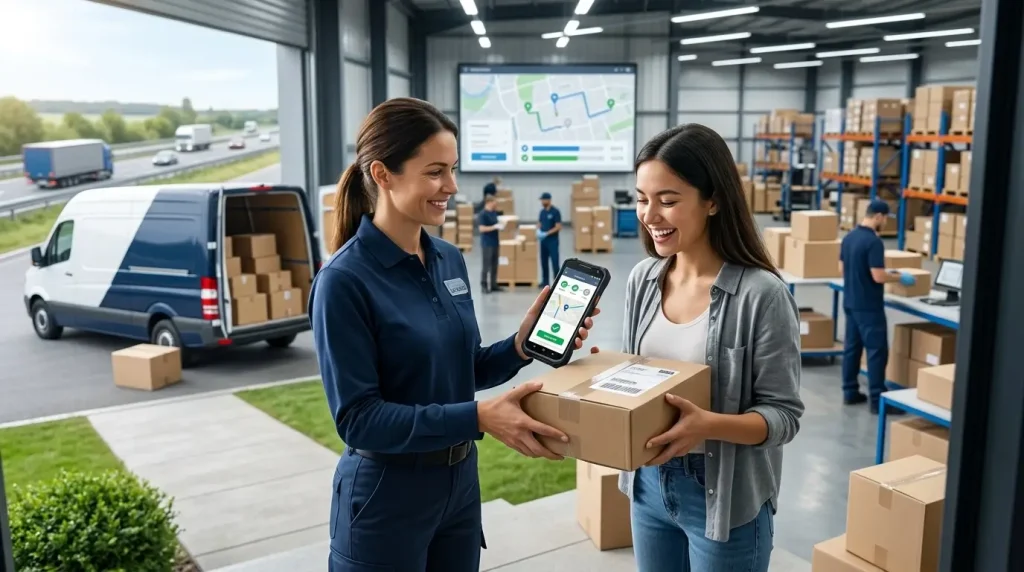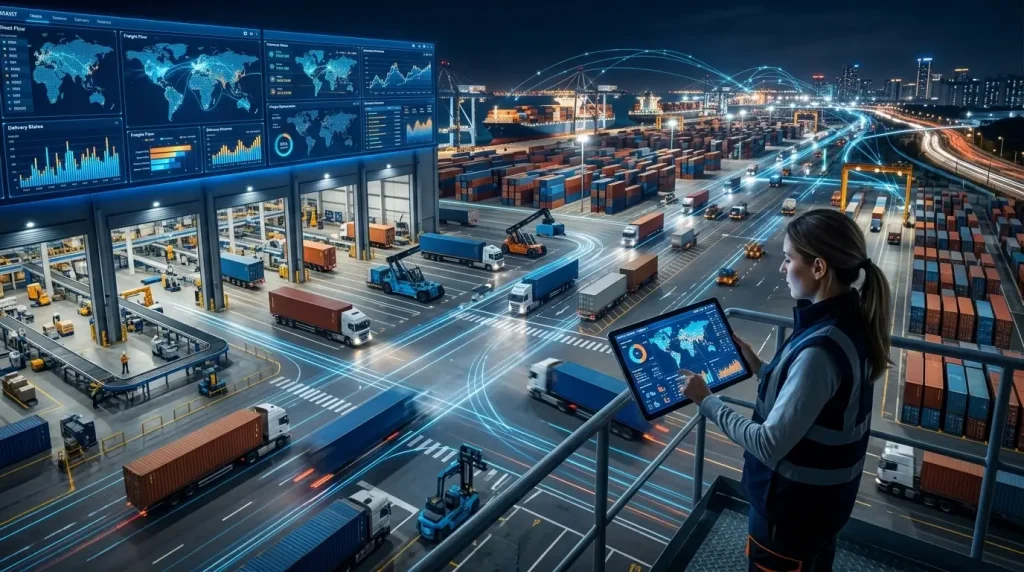



One of the biggest transformations in the logistics sector is the integration of processes from fragmented structures into integrated systems. Today, warehouse management, transportation operations, distribution processes, and financial transactions are often carried out through different systems. This situation leads to data fragmentation, communication problems, and operational errors, negatively impacting efficiency. Integrated logistics systems eliminate this fragmented structure, enabling end-to-end management of all processes through a single platform.
What are Integrated Logistics Systems?
Integrated logistics systems are systems that combine all components of logistics operations within a single digital infrastructure, ensure seamless data flow, and provide coordination between processes. Within this structure:
- TMS (Transportation Management System)
- WMS (Warehouse Management System)
- ERP integrations
- Vehicle tracking systems (GPS / IoT)
different technologies work in an integrated manner.
Thanks to this integration, all processes from order creation to delivery can be monitored and managed from a single center.
Problems Created by Fragmented Systems
In traditional logistics structures, systems are generally independent of each other. This situation brings many problems:
- The same data appearing differently in different systems
- Late detection of operational errors
- Communication breakdowns between departments
- Inconsistencies in reporting processes
Such problems lead to both time loss and increased costs. Integrated systems, on the other hand, eliminate these problems, making it possible to manage processes through a single, accurate data source.
Real-Time Data and Instant Intervention
One of the biggest advantages of integrated logistics systems is providing real-time data flow. All operational processes can be monitored instantly, and potential disruptions can be detected at an early stage.
For example:
- The system instantly alerts when a shipment is delayed
- Deviations in vehicle routes are detected
- Intervention occurs when a bottleneck forms in warehouse operations
This way, problems are resolved before they escalate, and operational continuity is ensured.
Operational Efficiency and Cost Advantage
Integrated logistics systems ensure that operations are carried out in a more planned and controlled manner. This directly translates to increased efficiency.
Advantages provided:
- Elimination of unnecessary repetitions
- Reduction of manual processes
- Automation of processes
- Optimization of resource utilization
Especially in high-volume operations, these systems provide significant cost savings.
Inter-Departmental Synchronization
Logistics operations are not limited to field processes only. Many units such as sales, operations, accounting, and customer service are part of this process.
Thanks to integrated systems:
- All departments work with the same data
- Information flow accelerates
- Misunderstandings and data losses are eliminated
This strengthens internal company coordination and speeds up decision-making processes.
Reporting and Strategic Decision Making
Integrated systems support not only operational processes but also managerial decisions. Since all data is collected on a single platform, detailed and accurate reports can be generated.
Thanks to these reports:
- Operational performance is analyzed
- Cost items are examined in detail
- Inefficient processes are identified
This provides businesses with a strong infrastructure for strategic decision-making.
Scalability and Growth Management
Traditional systems become inadequate when exceeding a certain capacity. However, integrated logistics infrastructures can easily adapt to growing operations.
This way:
- New customers and operations are quickly integrated into the system
- Increased workload is kept under control
- The growth process becomes sustainable
Contribution to Customer Experience
Integrated logistics systems also directly impact the customer experience. Transparent processes and instant information flow build customer trust.
- Order status is shared instantly
- Delivery processes become transparent
- Potential delays are notified in advance
This increases customer satisfaction and brand reliability.
Conclusion: Full Integration, Full Control in Logistics
Integrated logistics systems are the cornerstone of modern logistics operations. Establishing a data-driven and integrated structure instead of fragmented and uncontrolled processes provides businesses with both operational and strategic advantages.
For businesses aiming to succeed in today’s competitive environment, integration is no longer an option but a necessity. These systems, providing end-to-end management, make logistics processes faster, more efficient, and more sustainable.